


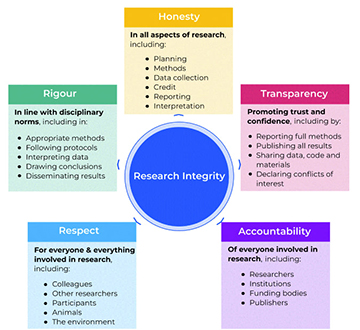
Research integrity, synonymous with good research practice, embodies the principles and standards that underpin trustworthy and credible research at every stage of its lifecycle. Encompassing the entire research process, from conception and design to implementation and dissemination, research integrity emphasizes the creation of environments and systems that foster positive research culture rather than impede it.
The Singapore Statement, a product of the 2010 World Conference on Research Integrity (WCRI), outlines four fundamental principles that form the bedrock of research integrity:
- Honesty: Upholding truthfulness in all facets of research.
- Accountability: Taking responsibility for the conduct of research.
- Professional Courtesy and Fairness: Promoting ethical interactions and fairness in collaborative work.
- Good Stewardship: Ensuring responsible management of research on behalf of others.
The UK Concordat to Support Research Integrity delves into key areas that contribute to maintaining research integrity:
- Honesty: Extending to the presentation of research goals, intentions, and findings, and acknowledging the work of other researchers.
- Rigour: Adhering to disciplinary norms and standards, employing appropriate methods, and drawing valid interpretations and conclusions from research.
- Transparency and Open Communication: Declaring competing interests, transparently reporting data collection methods, openly sharing research findings (including negative or null results), and presenting work to fellow researchers and the public.
- Care and Respect: Demonstrating care and respect for all participants in research, including humans, animals, the environment, and cultural objects, while maintaining the integrity of the research record.
- Accountability of Stakeholders: Creating a research environment where funders, employers, and researchers collectively empower individuals and organizations to uphold high standards. Ensuring accountability when behavior falls short of established standards.
By adhering to these principles and embracing a culture of responsibility, transparency, and respect, the research community can fortify the foundations of research integrity, fostering public trust and advancing the pursuit of knowledge.
More: https://ukrio.org/research-integrity/what-is-research-integrity/