


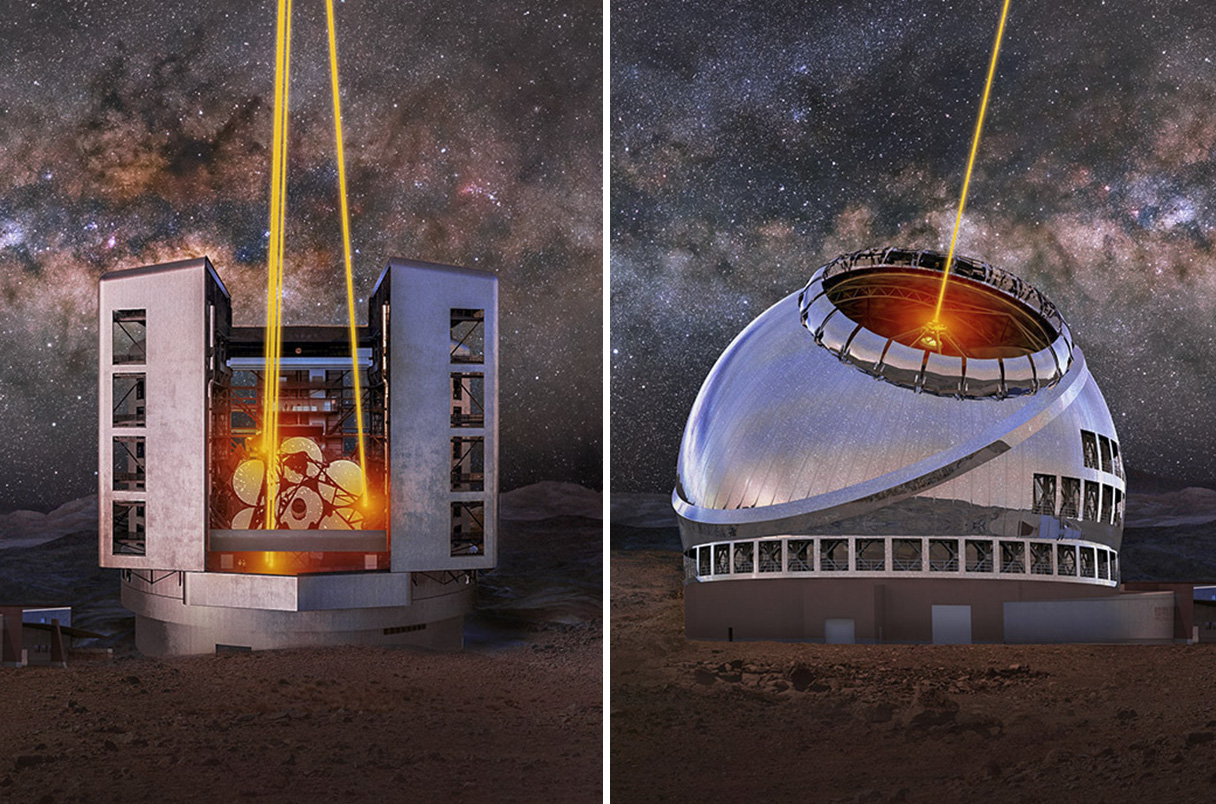
In a decision that will shape the future of astronomy in the United States, the National Science Board (NSB) has announced funding for just one of the proposed giant ground-based telescopes, leaving the fate of the second telescope uncertain.
The US Extremely Large Telescope Program (US-ELTP), representing the interests of two ambitious projects—the Giant Magellan Telescope (GMT) in Chile and the Thirty Meter Telescope (TMT) in Hawaii—had hoped for funding for both endeavors. However, the NSB has limited the budget to $1.6 billion, sufficient for substantial support for one 30-meter class telescope. Now, the GMT and TMT projects must compete for NSF funding, with the agency given until May to devise a selection process.
While some see this decision as a pragmatic move forward for U.S. astronomy, others lament the missed opportunity for both telescope projects. The GMT and TMT, backed by diverse consortia of institutions and partners, have long been envisioned as the next frontier of astronomical research, promising unparalleled insights into distant galaxies, exoplanets, and cosmic phenomena.
The journey toward realizing these telescopes has been fraught with challenges, including funding shortfalls and controversies over project sites. Despite early optimism, the privately funded approach faced difficulties in securing the necessary resources for billion-dollar endeavors.
In 2018, the GMT and TMT joined forces under the US-ELTP banner, offering NSF the opportunity to support both telescopes and provide U.S. astronomers with dual capabilities spanning hemispheres. However, escalating costs and budgetary constraints forced the NSB to reconsider its support for both projects.
The decision underscores the complexities of balancing competing priorities within the scientific community and the need to allocate limited resources effectively. While the chosen telescope will undoubtedly advance astronomical research, questions remain about the future of the other project and the broader implications for U.S. scientific leadership in the field.
As the NSF prepares to select a recipient for funding, stakeholders await further details on the selection process and timeline. Despite the challenges ahead, the US-ELTP remains committed to advancing its vision for groundbreaking astronomical research and collaboration.