


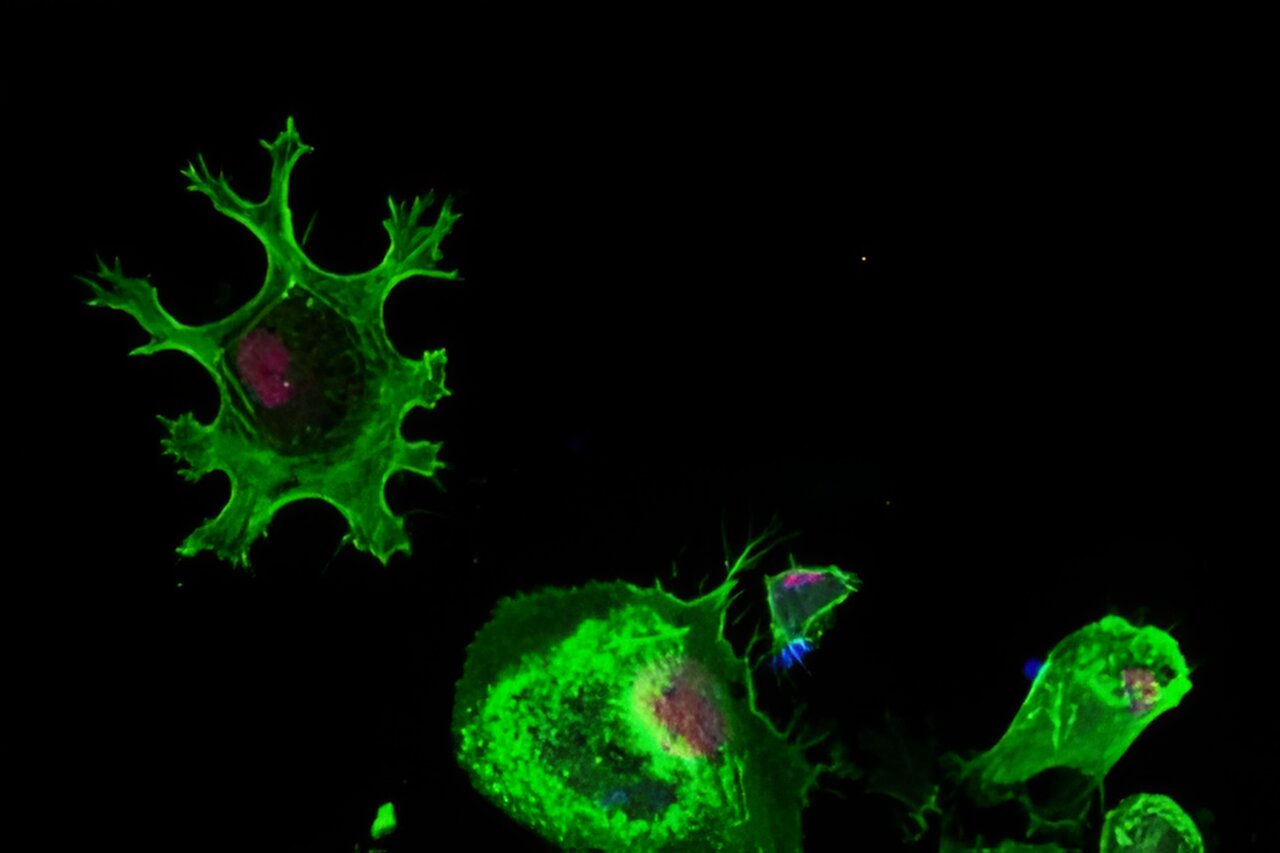
Researchers at the University at Buffalo have uncovered a groundbreaking discovery regarding a gene that is prevalent in 75% of the human population. Known as CHRFAM7A, this gene has long been associated with protecting against neurodegenerative disorders. However, a recent study published in eBioMedicine reveals that this gene also plays a crucial role in enhancing immune function.
CHRFAM7A is a gene unique to humans, emerging after the evolutionary split from chimpanzees millions of years ago. While its involvement in neuropsychiatric disorders has been extensively studied, its impact on the immune system has remained largely unexplored.
Dr. Kinga Szigeti, the corresponding author of the study, explains that the prevalence of this gene among humans suggests an inherent immune advantage. The research demonstrates how the active form of CHRFAM7A influences calcium signaling within cells, leading to the activation of actin cytoskeleton. This structural enhancement allows cells to be more resilient, offering protection against neurodegenerative diseases like Alzheimer's.
Moreover, the study elucidates how CHRFAM7A facilitates immune response by enabling cells to navigate through tissues more effectively. By altering the organization of actin, cells develop stronger defenses, allowing immune system components to access infected tissues efficiently. This mechanism aids in controlling infections at an early stage, limiting the replication of pathogens.
Dr. Szigeti underscores the broader implications of CHRFAM7A, suggesting its involvement in various biological processes beyond immune function. The gene's influence on calcium signaling suggests its potential impact on cellular metabolism and pathological conditions.
The research conducted by the UB team utilized pluripotent stem cells with the CHRFAM7A mutation, providing valuable insights into immune response dynamics. The gene's implications extend to systemic inflammatory responses, inflammatory bowel disease, COVID-associated cytokine storms, and other conditions.
Moving forward, the UB team is investigating CHRFAM7A's role in neurological disorders, inflammatory bowel disease, and cancer metastasis. The findings open avenues for identifying novel drug targets and highlight the importance of studying uniquely human genes in understanding disease mechanisms accurately.
More: https://medicalxpress.com/news/2024-04-people-uniquely-human-gene-immune.html