


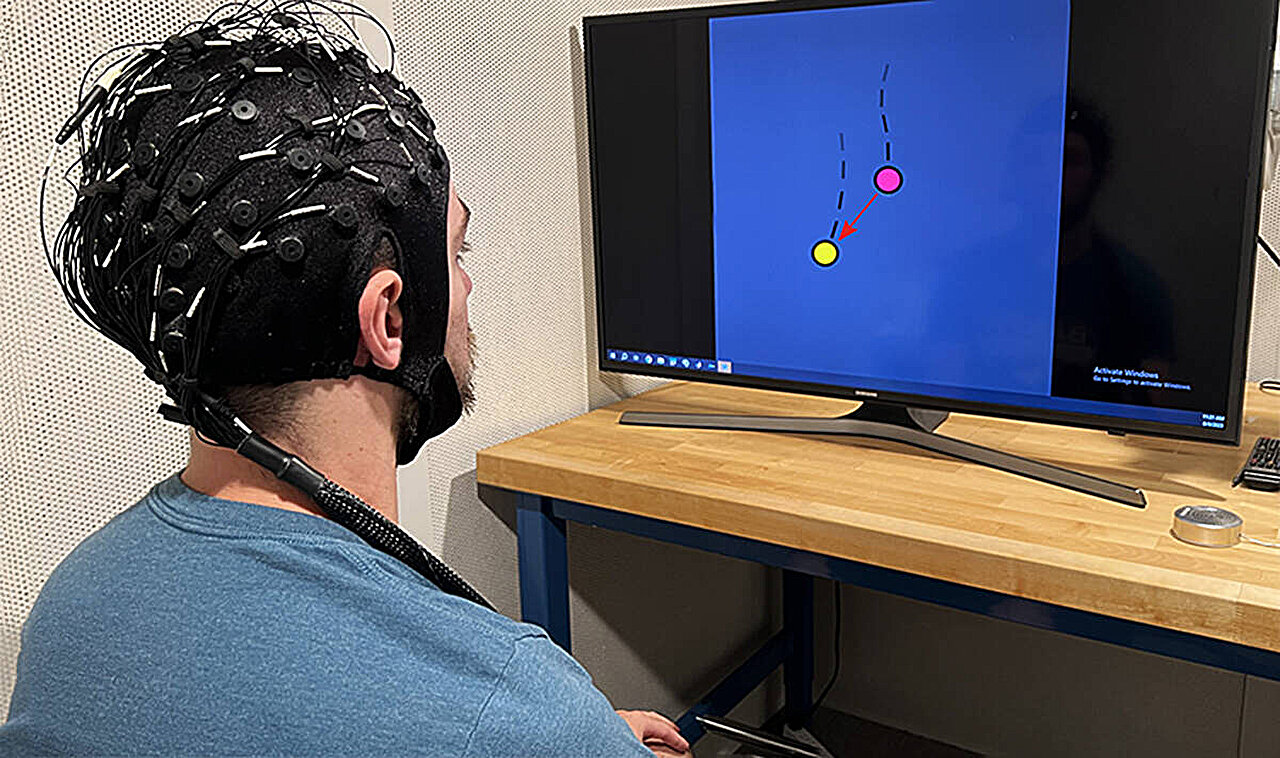
Carnegie Mellon University's He Lab has made significant strides in developing a noninvasive brain-computer interface (BCI) that offers a promising alternative to invasive BCIs. Their latest research, published in PNAS Nexus, showcases the remarkable performance of their AI-powered deep learning approach in enabling humans to control continuous tracking of moving objects through thought alone.
Noninvasive BCIs present several advantages over invasive counterparts, including enhanced safety, cost-effectiveness, and suitability for widespread use among patients and the general population. However, noninvasive BCIs face challenges due to less accurate recordings and complexities in interpretation.
In this study led by Professor Bin He, 28 human participants were tasked with using a noninvasive BCI to track a moving object in a two-dimensional space solely through thought. Electroencephalography (EEG) recorded their brain activity, which was then decoded and interpreted using AI-powered deep neural networks developed by the He group.
The results demonstrated exceptional performance of the noninvasive BCI, with participants successfully controlling continuous object movement through their thoughts. This breakthrough highlights the potential of AI technology to significantly improve BCI performance compared to conventional methods.
Bin He emphasized the transformative impact of AI advancements on noninvasive BCI technology, paving the way for broader human applications in the future. The group is now exploring the application of their AI-powered BCI in controlling robotic devices, with potential implications for assistive technology and rehabilitation for motor-impaired patients.
The research holds promise for individuals with conditions such as spinal cord injury or stroke, offering them a noninvasive and effective means of controlling assistive robots through neural signals. With continued advancements, AI-powered BCIs may soon become accessible to a wide range of users, transforming the landscape of assistive technology and rehabilitation.
More: https://techxplore.com/news/2024-05-refined-ai-approach-noninvasive-brain.html
