


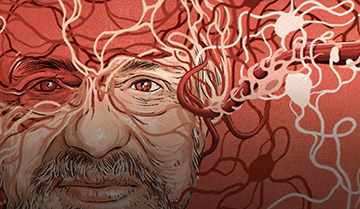
A dossier obtained by Science from whistleblowers suggests potential scientific misconduct related to a stroke drug and Alzheimer's research led by prominent neuroscientist Berislav Zlokovic at the University of Southern California (USC). The experimental drug, 3K3A-APC, aimed at limiting brain damage after strokes, had received substantial funding from the U.S. National Institutes of Health (NIH) for a clinical trial. However, the dossier alleges manipulated data in support of the drug's efficacy and raises concerns about increased deaths and disability in the phase 2 trial.
The dossier also points to seemingly doctored data in numerous papers from Zlokovic's lab, suggesting a broader issue of scientific integrity. The whistleblowers describe a culture of intimidation within the lab, where data adjustments were encouraged, and lab notebooks were altered after experiments to fit desired outcomes. Zlokovic's institution, USC, has initiated a confidential review of the dossier's content.
The controversy has prompted calls to halt all clinical testing of 3K3A-APC, with neurologists and neuroscientists expressing concerns about the reported anomalies. The lead whistleblower, Matthew Schrag, hopes for an NIH-led examination of the challenged papers, suggesting that some articles may warrant retraction. The situation underscores the challenges of ensuring scientific integrity and raises questions about the reliability of preclinical research supporting the drug's potential benefits.
