

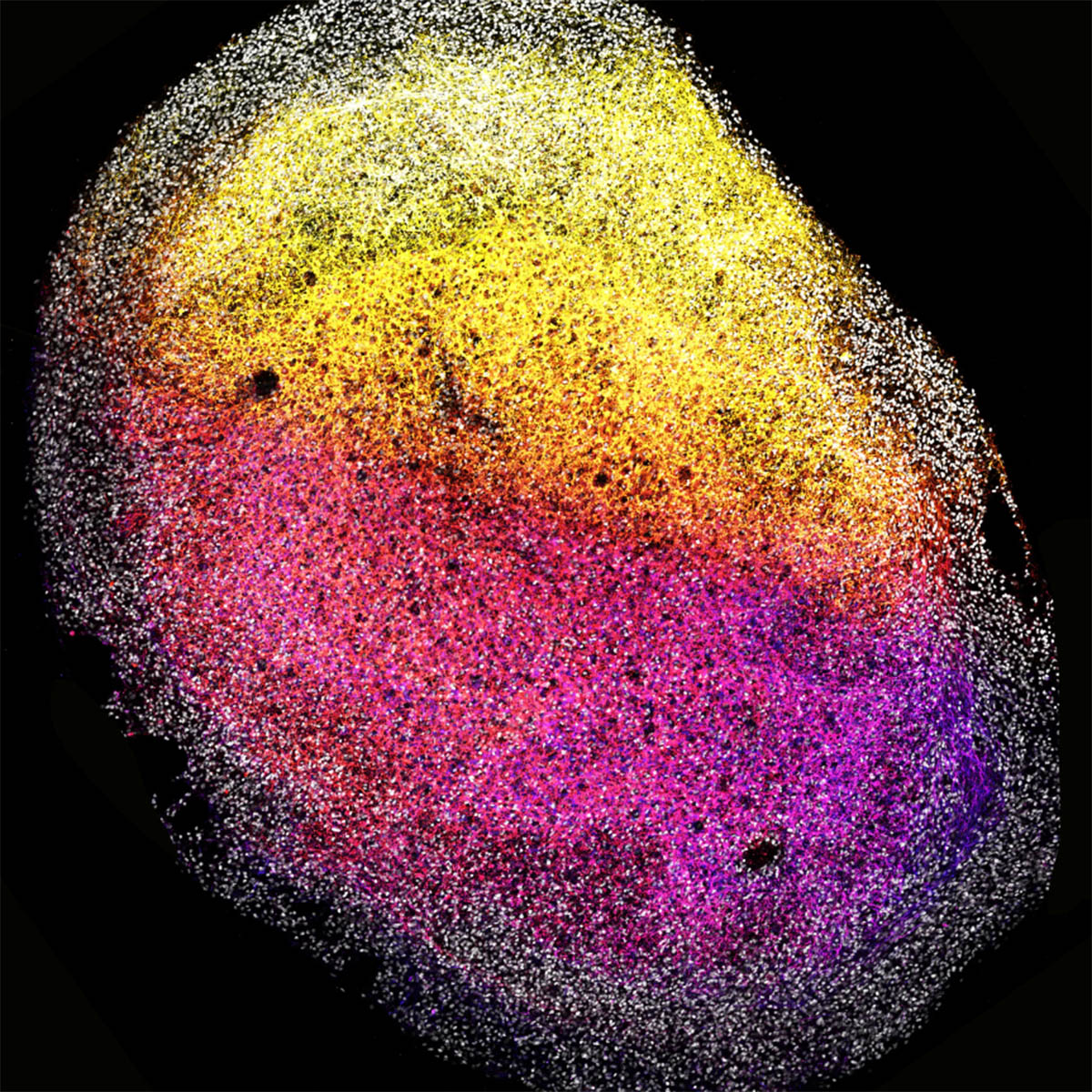
The intricate development of the human brain in the womb has long been a challenge to study, but a groundbreaking method using tiny brain-like structures called organoids may offer new insights. In a recent study published in Cell, researchers successfully grew these organoids, known as fetal brain organoids (FeBOs), from human fetal brain tissue. This pioneering approach not only provides a realistic model for understanding brain development but also holds potential for studying developmental disorders and brain cancers.
The team demonstrated the ability to genetically engineer these FeBOs, allowing them to mimic specific diseases. Arnold Kriegstein, a neurologist at the University of California, San Francisco, commended the researchers for their "interesting and creative uses" of the organoids, suggesting that they could unravel previously unexplored aspects of neuron identity formation in the maturing brain.
While scientists have previously created organoids representing various parts of the brain using stem cells, the FeBOs take a unique approach. By utilizing natural fetal brain tissue collected between 12 and 15 weeks postconception, the researchers aimed to capture the rapid expansion phase of the developing human brain.
The ethical considerations surrounding the use of tissue obtained from abortions are acknowledged, and the European research team obtained informed consent from donors without financial compensation. The FeBOs, grown from different brain regions, formed 3D structures resembling their original tissues, providing a closer representation of the human brain at this stage of development.
To enhance maturity, the researchers modified the FeBOs' environment, prompting progenitor cells to differentiate into neurons. The resulting organoids exhibited neural connections and firing patterns similar to those in an intact brain. Additionally, the team employed CRISPR genome editing to mutate genes associated with brain cancers, demonstrating the potential for testing new drugs and gaining insights into disorders like Down syndrome.
The study's findings suggest that FeBOs could serve as valuable models for drug testing in brain cancer research. However, opinions on their advantages over stem cell-derived organoids vary. Some experts, like Alysson Muotri of UC San Diego, view FeBOs as complementary, emphasizing their ability to show how individual brain regions grow and form structures. Conversely, stem cell-derived organoids offer insights into the earliest stages of brain development.
While these advances hold promise, challenges persist, particularly in regions with strict regulations on fetal tissue research. In the United States, recent changes in laws and potential restrictions on research pose obstacles to scientific exploration in this field. As technology continues to advance, the delicate balance between ethical considerations and groundbreaking research remains a focal point of discussion.