


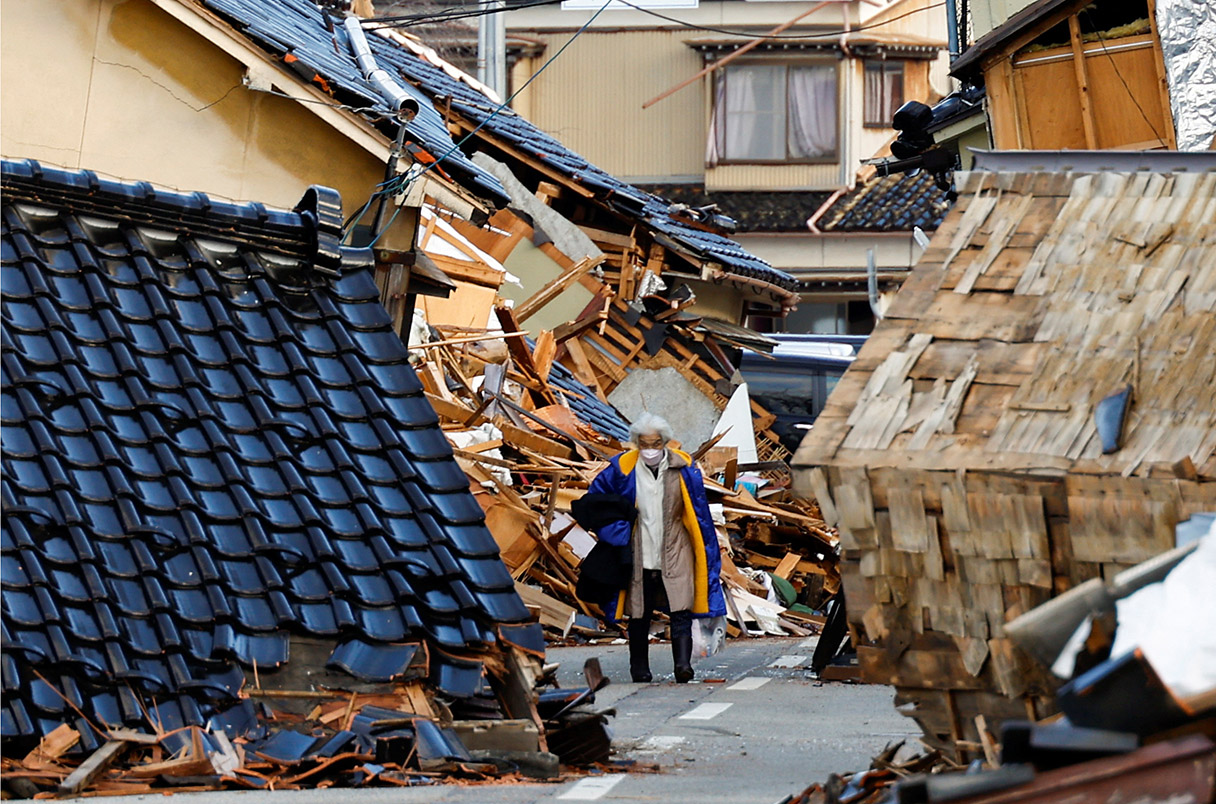
In an unexpected turn of events, a magnitude 7.5 earthquake that struck Japan on New Year's Day, claiming over 160 lives, was preceded by a mysterious and prolonged seismic swarm on the Noto Peninsula. Typically, earthquake swarms, characterized by numerous small to moderate tremors, occur in areas with volcanic or geothermal activity and tend to fade away quietly. However, the Noto Peninsula swarm defied expectations, culminating in a significant earthquake that has left scientists grappling with questions about the unusual process leading to the catastrophic event.
Zachary Ross, a geophysicist at the California Institute of Technology, emphasizes the rarity of a seismic swarm foreshadowing such a substantial earthquake, prompting scientists to delve into the intricacies of this phenomenon. Kyoto University geodesist Takuya Nishimura notes the myriad unresolved questions surrounding the relationship between the seismic swarm and the New Year's Day quake.
Seismologist Aitaro Kato of the University of Tokyo explains that earthquake swarms typically result from high-pressure fluids—water, gas, or magma—emanating from deep underground and lubricating faults, leading to prolonged periods of small earthquakes. While Japan's east coast is renowned for its tectonic plate collisions, generating powerful earthquakes, the west coast, including the Noto Peninsula, is also seismically active, albeit without volcanic or geothermal activity traditionally associated with such swarms.
Surprisingly, the Noto Peninsula experienced a prolonged swarm starting in November 2020, defying expectations due to the lack of typical fluid-generating geological activity. Studies suggest that fluids rising from the upper mantle through faults might be responsible for the ongoing seismic activity. A study by Nishimura and colleagues in 2023 revealed a 70-millimeter rise in the land above the swarm, indicating the swelling of the crust at a depth of approximately 16 kilometers.
While the majority of quakes in the swarm were weaker than magnitude 4, escalating magnitudes were observed over time. Notably, a magnitude 6.5 event in May 2023 resulted in one fatality and widespread damage. Researchers believe that deep fault movements from the seismic swarm increased strain and stress on faults higher up in the crust, eventually leading to larger earthquakes.
The New Year's Day earthquake, the strongest to hit the Sea of Japan coast since 1993, raised numerous questions about its connection to the ongoing swarm. Nishimura highlights potential scenarios, including rising fluids greasing the fault or stress loading from the swarm triggering the rupture. Researchers are now mapping aftershock distributions to determine if the quake occurred on faults involved in the swarm.
The catastrophe underscored the vulnerability of Japan's traditional wooden buildings, particularly to fires triggered by collapsing structures. The heavy tile roofs, while resilient to typhoons, proved susceptible to earthquakes, raising concerns about the resilience of Japan's architectural heritage in the face of seismic events. The aftermath of the earthquake, with ongoing aftershocks and landslides, adds urgency to the need for a deeper understanding of seismic swarms and their potential implications for larger earthquakes.